How the Best Gin Bar NYC Menus Balance Variety and Quality
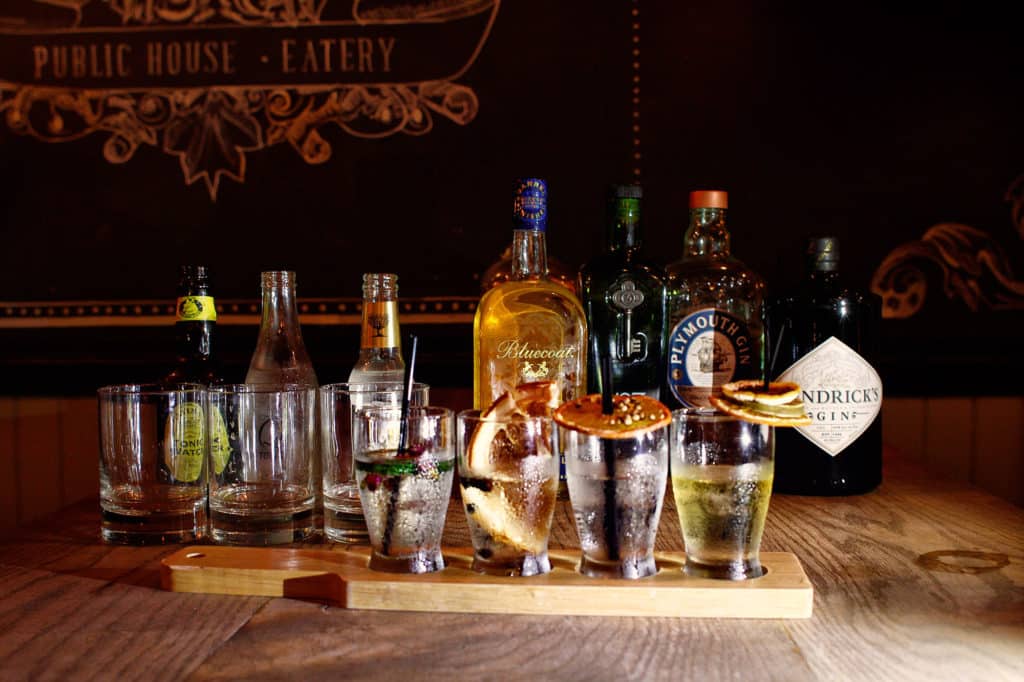
Walk into a serious gin program in New York and the first thing you notice is not always the bottle count. It is the sense of restraint. The best menus feel abundant without becoming noisy. They offer enough range to reward a devoted gin drinker, yet they never read like a warehouse inventory pasted into a leather binder. That balance, variety on one side and quality on the other, is what separates a memorable bar from one that merely owns a lot of glass.
This matters more with gin than with almost any other spirit. Whiskey can lean on age statements and regional loyalty. Tequila can organize itself around agave category and production style. Gin is more slippery. It spans London dry classics, citrus-driven contemporary expressions, floral bottlings, savory distillates, navy strengths, barrel-rested experiments, and a growing number of local releases that deserve attention but do not automatically earn a permanent slot. A bar that wants to call itself a destination for gin has to make hard choices.
In a city as competitive as New York, those choices become even sharper. Rent is high, storage is finite, labor is expensive, and guest expectations are unusually broad. On any given night, a Gin Bar NYC regular may want a textbook Martini, a visiting tourist may ask for something local and approachable, and a spirits nerd may want a juniper bomb from Scotland poured side by side with a small-batch American gin. Menus that work are built by people who understand that curation is not the opposite of variety. It is how variety becomes useful.
A long menu is not the same as a strong menu
There is a temptation in specialist bars to show seriousness through accumulation. More labels, more flights, more house tonics, more riffs on the same three drinks. Early in a program’s life, that can feel exciting. Over time, if no one prunes it, the menu starts to sag under its own weight.
Guests rarely experience a menu as a spreadsheet. They feel it in more practical ways. Too many overlapping bottlings make staff explanations vague. Too many similar cocktails make decision-making tiring. Too many niche options can make a guest worry they are missing the “right” choice. When a bar leans too hard into sheer volume, the result is often paradoxical: the guest leaves having explored less.
The best gin menus in New York solve this by editing aggressively. They may carry dozens of gins behind the bar, sometimes far more, but the guest-facing menu acts as a map. It creates pathways. It groups styles intelligently. It tells you, without lecturing, whether a gin is bright and citrusy, earthy and herbaceous, classic and dry, or rich enough to handle a bold bitter aperitif. That editorial hand is where quality begins.
I have seen bars improve dramatically not by adding a single bottle, but by cutting ten. Suddenly staff could speak with confidence. Suddenly the backbar looked purposeful. Suddenly a guest who ordered one G and T was willing to stay for a Martini because the menu made the second choice feel clear rather than overwhelming.
The backbone is classic structure
For all the experimentation around gin, the strongest programs still anchor themselves in classic service. If a bar cannot make a clean, cold Martini with proper dilution, no amount of botanical theater will rescue the menu. The same goes for a Negroni, a Gin and Tonic, and one or two shaken sours that show control rather than sugar dependence.
That classic backbone serves two functions. First, it gives the guest reference points. A person does not need deep gin knowledge to order confidently if the menu offers familiar forms executed at a high level. Second, it exposes the quality of the spirits list. Gin is transparent in a Martini in a way it is not in a heavily garnished signature drink. If the house selection is thoughtful, the classics will prove it.
A well-run Gin Bar NYC program often treats classic cocktails almost like calibration tools. Different gins are chosen because they reveal distinct strengths in different builds. A peppery London dry may thrive in a dry Martini with a lemon twist. A softer, more floral gin may perform better in a 50/50 style with blanc vermouth. A bold, high-proof gin may stand up beautifully in a Negroni, where equal parts can flatten more delicate distillates. This is not academic hair-splitting. It is how the menu moves from broad to precise.
Some bars make the mistake of trying to showcase every gin in every format. In practice, that usually creates inconsistency. Better menus know when to narrow the lane. They might offer a Martini section with a curated set of recommended gins rather than the entire backbar. That is not limiting choice. It is protecting the drink.
Variety works best when it is organized by experience, not by bottle count
One of the smartest shifts in modern menu design has been away from producer-centric organization and toward guest-centric organization. A guest does not necessarily know or care whether a gin comes from a famous house if they cannot predict how it will taste. Sensory logic almost always beats alphabetical logic.
This is especially true in New York, where the crowd can range from industry regulars to first-time visitors in the same service. A menu that divides gin offerings into useful taste families does several jobs at once. It simplifies discovery, trains the staff, and subtly communicates expertise without sounding pretentious.
The bars that do this well avoid cartoonish shorthand. “Floral” alone tells you very little. The more useful descriptors are comparative and grounded in service. A gin might be “juniper-led with citrus peel and a dry finish,” or “soft on the palate, with cucumber, garden herbs, and enough structure for a Martini.” That sort of language respects the guest’s intelligence and helps them imagine the drink.
There is also a commercial angle. When people feel guided rather than sold to, they order more adventurously. A guest who came in expecting one safe cocktail often upgrades to a second round or a tasting pour if the menu makes exploration feel manageable. The strongest programs are educational, but lightly so. They do not turn the table into a lecture.
The quality side starts long before the menu is printed
A polished menu can hide weak buying for a while, but not forever. Real balance comes from the selection process itself. Every bottle needs a reason to be there. Sometimes that reason is straightforward, such as carrying a benchmark London dry because it is indispensable. Sometimes the reason is more strategic, like including a local New York distillate that adds geographic relevance and gives the staff a story to tell. Either way, serious programs ask a hard question of each addition: what role does this gin play that another bottle does not?
That question becomes urgent in a city where storage space is expensive and turns matter. Dusty niche inventory is not a badge of sophistication. It is cash sitting still. The best buyers I have worked around tend to think in terms of functions. They want a few foundational bottles, a few conversation pieces, a few flexible workhorses for cocktails, and a handful of seasonal or rotating expressions that keep the program alive.
Here is where the trade-offs get real. A menu packed with obscure imports may impress collectors but can create replacement headaches and uneven margins. A menu built mostly around mass-market names may be easy to run but forgettable. The sweet spot sits somewhere in the middle, where the classics are dependable, the discoveries are meaningful, and the whole list can be supported by training and consistent supply.
This is one reason the best gin bars often look less maximalist than outsiders expect. Restraint is not caution. It is operational intelligence.
Staff knowledge is part of the menu, whether it is written down or not
Even a beautifully structured list fails if the team cannot translate it tableside. Gin rewards description, but it punishes bluffing. Guests can tell when a server or bartender is reciting tasting notes from a distributor sheet rather than speaking from actual experience.
At a great gin bar, staff are not expected to memorize every botanical in every bottle. That sounds impressive on paper and often proves useless in real conversation. What matters more is comparative fluency. Can they explain why one gin works better in a Martini than another? Can they steer a vodka drinker toward a gentler gin build without making them feel cornered? Can they recommend a tonic pairing that brightens the spirit rather than burying it under quinine and garnish?
In practice, the strongest teams taste constantly and talk in concrete terms. They know which gins show lemon pith, which lean resinous, which feel oily on the palate, which can disappear in citrus, and which blossom with a savory garnish like olive or rosemary. That kind of service creates trust, and trust allows a menu to stay focused. A guest will accept a curated list more readily when the human guidance is sharp.
I remember one Manhattan bartender who handled this perfectly during a packed Friday service. A guest asked for “something gin, but not too piney.” Instead of launching into jargon, he asked whether she liked grapefruit, fresh herbs, or cleaner citrus. Within thirty seconds he had steered her toward a bright, restrained highball built on a modern gin with rosemary and pink peppercorn in the garnish. She had two. That is menu design in action, even though nothing changed on the page.
Signature cocktails should prove range, not hide the base spirit
This is where weaker gin programs often lose discipline. Because gin is so adaptable, it invites overbuilding. A bartender can stack liqueurs, syrups, tinctures, shrubs, infused wines, and five garnishes onto the glass and still technically serve a gin cocktail. The problem is that complexity is not the same as identity.
The best signature sections on a Gin Bar NYC menu tend to show a lighter hand. They are varied, yes, but each drink has a clear reason for existing. One may highlight green herbs and saline notes. Another may work as a bitter aperitif. A third might be long, sparkling, and low enough in proof to start the evening. The point is not to prove how many ingredients the bar can source. The point is to show how many personalities gin can take on without disappearing.
A useful rule is that guests should still be able to sense the spirit at the center. If the drink could just as easily have been made with vodka, rum, or aquavit, it is not doing much for the gin program. This does not mean every cocktail must taste aggressively juniper-forward. It means the Gin Bar NYC botanical architecture of the spirit should matter to the finished drink.
The bars that get this right often keep their signature list shorter than expected. They would rather present six or eight strong ideas than fifteen muddled ones. That discipline helps quality in service as well. Fewer signatures mean tighter prep, more consistent execution, and less time spent reaching for obscure modifiers during the rush.
Tonic pairings, garnishes, and ice are small decisions with large consequences
Gin service is vulnerable to a particular kind of menu inflation: garnish theater. There is nothing wrong with a thoughtful garnish, or with pairing specific tonics to specific styles of gin. In fact, done well, these touches can sharpen the program. Done badly, they become camouflage.
A tonic is not neutral. Some are dry and bitter, some sweeter and citrus-driven, some aggressively carbonated, some soft and fleeting. A good bar matches tonic to spirit with care. The same gin can read crisp and lifted with one tonic, or flat and confectionary with another. That is not a minor issue on a menu where highballs and G and Ts often carry substantial volume.
The same goes for garnish. Citrus is not interchangeable. A lemon twist brings acidity and brightness in a different register than grapefruit peel. Cucumber can cool or dull, depending on the gin. Herbs look romantic but can quickly dominate the nose if bruised too hard or overused. Black pepper, pink peppercorn, star anise, thyme, olives, and bay all have places, but only when they reinforce the spirit instead of competing with it.
Ice rarely gets menu copy, yet it is one of the clearest markers of quality. A properly cold, well-carbonated Gin and Tonic served over abundant fresh ice will outperform a more exotic recipe built carelessly. New York guests may not name the technical reason, but they notice the difference immediately.
Price architecture reveals whether the menu is built to last
A balanced menu is not only about taste. It is also about economics. One of the more overlooked signs of a strong gin bar is a pricing structure that invites exploration without punishing curiosity. If every notable gin is priced like a luxury collectible, the bar narrows its audience and turns the menu into a museum. If pricing is too flat, premium inventory moves poorly or margins collapse.
The best programs usually create several entry points. A guest should be able to get an excellent, straightforward G and T without feeling upsold. They should also have a route into a more specialized Martini, a reserve pour, or a guided flight if that is what they want. The menu should feel hospitable at multiple spend levels.
That does not mean everything must be cheap. New York is expensive, and truly distinctive spirits cost money to acquire and store. But value can be communicated through specificity. Guests are more willing to pay when they understand what makes a bottle or drink different, whether it is proof, production style, scarcity, local relevance, or unusual balance in the glass.
A healthy menu also considers pacing. Some of the smartest gin bars include lower-proof aperitif options or longer, lighter serves that let guests stay for another round without burning out early. That increases both satisfaction and revenue, while reinforcing the sense that the menu was built around an actual night out, not just a tasting room fantasy.
Seasonal change matters, but over-rotation creates fatigue
New York menus benefit from movement. Guests return often, and a static selection can begin to feel stale even when the liquid is excellent. Seasonal shifts keep a gin program alive. Spring favors greener, brighter profiles. Summer welcomes taller drinks, sharper carbonation, and citrus-led pairings. Cooler months can support richer stirred drinks, savory notes, or barrel-rested gin in more serious builds.
Still, constant rotation has a cost. If the list changes too often, the staff lose confidence, the regulars lose their bearings, and the bar loses the cumulative strength that comes from repetition. Signature drinks improve after weeks of service, once bartenders have made them hundreds of times and solved the tiny practical issues that no test round reveals.
The best balance is usually a stable core with a living edge. A few classics stay. A few high-performing signatures remain because guests ask for them. Then a section, or several individual slots, rotates with season, supply, and creative energy. That approach gives the bar freshness without sacrificing standards.
When local distilleries release something strong, this rotating edge is also where a bar can respond quickly. It is one of the most effective ways for a Gin Bar NYC menu to feel connected to the city rather than merely located in it.
What guests remember
People rarely leave a bar talking about how many SKUs it carried. They remember whether the Martini tasted exact. They remember whether the recommendation matched what they actually wanted. They remember whether the menu helped them try something new without making them feel ignorant. They remember if the second drink felt as considered as the first.
That is the central lesson behind the best gin programs in New York. Variety matters, because gin is a spirit of enormous breadth and a city audience expects options. Quality matters more, because options only become meaningful when they are selected, organized, and served with judgment. The strongest menus do not chase completeness. They chase coherence.
When a bar gets that right, the whole experience tightens up. The backbar looks less cluttered, even if it is deep. The staff sound more confident. The cocktails arrive with a sense of purpose. The guest relaxes. Choice becomes pleasure rather than work.
That is what great curation feels like in the glass. Not less gin, exactly. Better reasons for every bottle, every drink, and every line on the page.
The Winslow
243 E 14th St
New York, NY 10003, United States
Phone: +1 212-777-7717
FAQ About Gin Bar NYC
How to do a gin tasting?
Start with a small pour and gently smell the gin before taking a small sip. Notice its juniper, citrus, floral or spice notes, then compare how the flavor changes with a little water or tonic. At a gin bar, ask the bartender to explain the selection and botanical pairings.
How to make the best tasting gin and tonic?
Use chilled gin, fresh tonic and plenty of ice. A common starting ratio is one part gin to two parts tonic, adjusted to taste. Choose a garnish that complements the gin's botanicals and stir gently to preserve the bubbles.
What is the smoothest tasting gin?
There is no single smoothest gin for everyone. Perceived smoothness depends on the botanical recipe, alcohol strength, serving temperature and mixer. Describe whether you prefer citrus, floral, herbal or juniper-forward flavors so a bartender can suggest a suitable style.